
Generative Engine Optimization (GEO)
Visibilidade em IA por idioma e país: por que não existe GEO global (2026)
Resposta curta: as citações de IA variam muito por idioma e por país, e em perguntas informacionais o idioma da consulta pesa mais que a geografia de quem pergunta — mas isso se inverte em buscas com intenção local, e as evidências disponíveis não conseguem separar os dois por completo. Os modelos localizam de formas bem diferentes, e o ecossistema chinês é um mundo à parte. Para marcas multimercado não existe uma única "visibilidade em IA": medição e estratégia precisam considerar idioma e país. Este texto faz parte do nosso guia de campo da economia da citação.
O idioma vence a geografia
A análise da Profound sobre 3,25 bilhões de citações em 7 modelos e 14 países encontrou que a geografia de um país é secundária diante de uma força mais forte: o idioma da consulta — e que o efeito varia por modelo. Faça a mesma pergunta em holandês e em inglês e você recebe um conjunto de fontes diferente, muitas vezes mais diferente do que mudando de país.
Uma ressalva honesta: o estudo da Profound emparelhou cada país com seu idioma nativo. Portanto, é um sinal direcional forte — não um experimento controlado. Ninguém publicou ainda um teste que varie de forma independente a localização do usuário e o idioma da consulta. Trate "o idioma vence a geografia" como a hipótese padrão correta, não como uma lei da física.
Onde a geografia ainda pesa
O idioma vence nas perguntas informacionais — mas mude para intenção local e a geografia assume. O estudo da Yext com 6,8 milhões de citações encontrou que Google, OpenAI e Perplexity confirmam usar a localização do consumidor em perguntas sobre empresas e serviços: a mesma pergunta feita de dois lugares recebe respostas diferentes, construídas a partir de fontes diferentes (os sites das mesmas redes varejistas ficaram com 70% das citações em mercados rurais, contra 20% em áreas urbanas competitivas). Já um teste independente em 20 regiões feito pela dopest.io — uma única pergunta em inglês, 200 execuções, idioma constante — encontrou as mesmas poucas fontes citadas no mundo inteiro (um único motor e uma única pergunta: um sinal direcional, não uma conclusão fechada) — para perguntas genéricas, a geografia é ruído. A lição: se seus compradores perguntam "melhor X perto de mim", a localização é de primeira ordem; se perguntam "melhor X", o idioma é.
Os modelos localizam de formas bem diferentes
O estudo da Temso AI com 7 milhões de citações em seis idiomas fora do inglês e 12 países encontrou uma diferença de 34 pontos percentuais entre o motor mais localizado e o menos localizado:
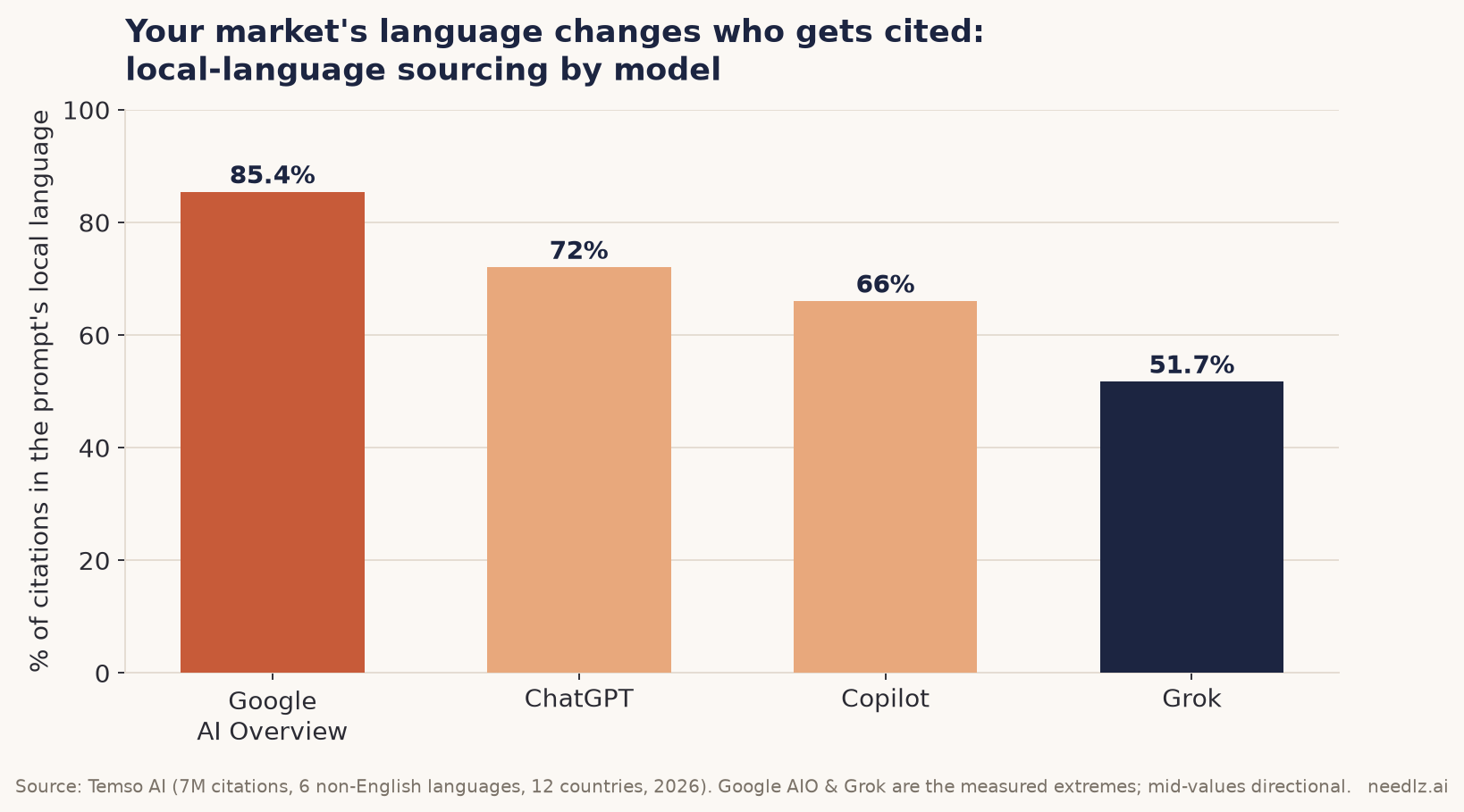
- Google AI Overview: ~85,4% das citações no idioma local do prompt — o mais localizado.
- Grok: ~51,7% — o menos; muito mais propenso a responder uma consulta fora do inglês com fontes em inglês.
O efeito prático: se os seus compradores perguntam em alemão, francês ou espanhol, a IA do Google é bem mais propensa a citar conteúdo no idioma local do que o Grok. O seu conteúdo e a sua corroboração precisam existir no idioma do mercado, não apenas traduzidos depois.
O Oriente é um ecossistema separado
Os motores chineses — DeepSeek, Qwen (Alibaba), Baidu ERNIE, Doubao (ByteDance), Kimi — bebem de um ecossistema de fontes distinto e em boa parte fechado, formado por plataformas em chinês. Táticas da web ocidental não se transferem. Uma marca séria sobre a China precisa de uma abordagem de GEO dedicada em chinês, não de uma média global.
O que marcas internacionais precisam fazer
- Medir por idioma e por país, motor a motor — nunca uma única nota global.
- Construir conteúdo e corroboração no idioma local em cada mercado prioritário (especialmente para a IA do Google, que recompensa muito isso).
- Escolher motores por mercado — o assistente líder muda de país para país, e o comportamento de fontes dele também.
- Tratar a China (e outros ecossistemas fechados) como programas separados.
A parte opinativa
"Visibilidade global em IA" é uma ilusão confortável. A realidade é um mosaico de mercados de idioma e motor, cada um com a sua própria lógica de citação. As marcas que medem o mosaico — em vez de uma média global — vão vencer, sem alarde, mercados em que os concorrentes nem percebem que estão invisíveis.
Para os dados completos e a metodologia, leia A economia da citação · relacionado: Quais fontes a IA cita?.
A needlz.ai ajuda marcas a conquistar citações nas respostas de IA — e comprova o ganho. Conquistado, nunca alugado.